MF Global And Pork Producers’ Futures Trading Accounts for the Senate Committee on Agriculture, Nutrition & Forestry

Contact: Dave Warner 202-347-3600

Washington, December 19, 2011 -

Introduction

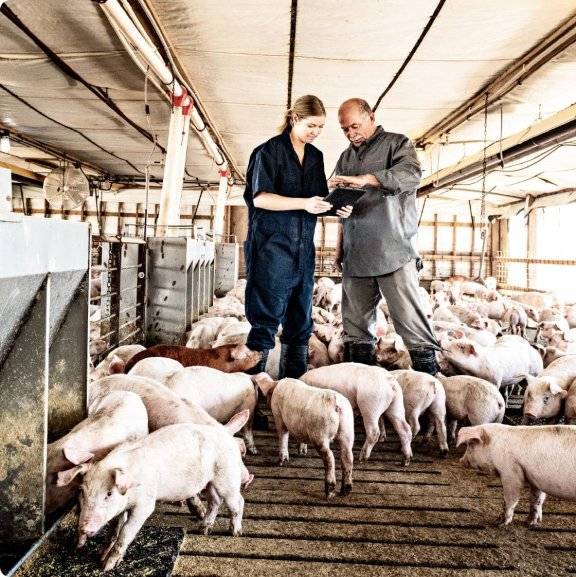
The National Pork Producers Council (NPPC) is an association of 43 state pork producer organizations and serves as the voice in Washington, D.C., for the nation’s pork producers. The U.S. pork industry represents a significant value-added activity in the agriculture economy and the overall U.S. economy. Nationwide, more than 67,000 pork producers marketed more than 110 million hogs in 2010, and those animals provided total gross receipts of $15 billion. Overall, an estimated $21 billion of personal income and $34.5 billion of gross national product are supported by the U.S. hog industry. Economists Dan Otto and John Lawrence at Iowa State University estimate that the U.S. pork industry is directly responsible for the creation of 34,720 full-time equivalent pork producing jobs and generates 127,492 jobs in the rest of agriculture. It is responsible for 110,665 jobs in the manufacturing sector, mostly in the packing industry, and 65,224 jobs in professional services such as veterinarians, real estate agents and bankers. All told, the U.S. pork industry is responsible for more than 550,000 mostly rural jobs in the U.S.


Exports of pork continue to grow. New technologies have been adopted and productivity has been increased to maintain the U.S. pork industry’s international competitiveness. As a result, pork exports have hit new records for 18 of the past 20 years. In 2011, so far, the U.S. pork industry has exported nearly $5 billion of pork, which added $57 to the price producers received for each hog marketed. Net exports this year represent about 20 percent of pork production. The U.S. pork industry today provides 21 billion pounds of safe, wholesome and nutritious meat protein to consumers worldwide.


Profile Of Today’s Pork Industry

Pork production has changed dramatically in this country since the early 1980s. Technology advances and new business models changed operation sizes, production systems, geographic distribution and marketing practices.


U.S. pork farms have evolved from single-site, farrow-to-finish (i.e., birth-to-market) production systems that were generally family-owned and small by today’s standards to multi-site, specialized farms that generally are still family-owned. (There are still many single-site operations.) The changes were driven by the biology of the pig, the business challenges of the modern marketplace and the regulatory environment. Separate sites helped in controlling troublesome and costly diseases and enhanced the effect of specialization. Larger operations can spread overhead costs, such as environmental protection investments and expertise, over more farms and buy in large lots to garner lower input costs. The change in sizes has been the natural result of economies of scale.


Marketing methods have changed as well. As recently as the early 1980s, a significant number of hogs were traded through terminal auction markets. Many producers, though, began to bypass terminal markets and even country buying stations to deliver hogs directly to packing plants to minimize transportation and other transaction costs. Today, hardly any hogs are sold through terminal markets and auctions, and the vast majority of hogs are delivered directly to plants.


Pricing systems have changed dramatically, too, from live-weight auction prices to today’s carcass-weight, negotiated or contracted prices, with lean premiums and discounts paid according to the predicted value of individual carcasses.


Today, the prices of a small percentage of all hogs purchased are negotiated on the day of the agreement. All of the other hogs are sold/priced through marketing contracts or are packer produced in which prices were not negotiated one lot or load at a time but determined by the price of other hogs sold on a given day, the price of feed ingredients that week or the price of lean hog futures on the Chicago Mercantile Exchange (CME). These risk-management mechanisms are entered into freely and often aggressively by producers and packers alike to ensure a market for and a supply of hogs, respectively, and to reduce the risks faced by one or both parties.


All of this means the days of rising at dawn to simply feed and care for ones pigs are over. In addition to that daily task, today’s pork producers — many of whom have at least a bachelor’s degree in animal science, business, economics or similar discipline — must be very proficient at managing the prices they pay for their inputs, i.e., corn and soybean meal, and at calculating the prices they’d like to receive for their hogs when they sell them.


There are a number of ways that pork producers manage their risk, but the most common is use of the futures market — at least for a percentage of the pigs they sell each year.


How Futures Market Works

The futures market, which has been used for nearly 150 years, provides an efficient and effective way to manage, or transfer, price risk. It also provides price information that is used as a benchmark in determining the value of a particular commodity or financial instrument at a specific time.


The market’s benefits, risk transfer and price discovery, reach every sector of the world economy, where changing market conditions create economic risk in the diverse fields of agricultural products, foreign exchange, imports, exports, financing and investments.


In the agricultural industry, futures contracts are bought and sold to protect producers from the volatility in the commodities market. Hundreds of different strategies are used, but allestablish a price level now for items such as feed grains to be delivered later, providing what amounts to insurance against adverse price changes. This is called hedging.


A relatively small amount of money, known as initial margin, is required to buy or sell a futures contract. So, for example, on a particular day, a margin deposit of just $1,000 might allow for the purchase or sale of a futures contract covering $25,000 worth of soybean meal. (These transactions, however, must be backed by the financial resources of the purchaser; the buyer must be able to execute the contract.)


The margin deposit simply locks in the price — based on that particular day’s market for, say, soybean meal — that will be paid at a future date. Using the example above, suppose on Dec. 20, 2011, soybean meal is selling for delivery in March at $100 a ton. A pork producer buys a futures contract for 250 tons — $25,000 — with a $1,000 margin deposit.


If at delivery time the price in the market has risen to $110 a ton, the producer will need to pay the soybean meal supplier $27,500 (250 tons times $110 per ton), or $2,500 more than the price at the time the futures contract was bought. But that higher cost is offset by the profit the producer makes selling the $100-a-ton futures contract; the contract is worth $10 a ton more, or $2,500.


The margin required to buy or sell a futures contract is solely a deposit of good faith that can be drawn on by a brokerage firm to cover losses that a customer may incur. If the funds in a margin account are reduced by losses to below a certain level — known as the maintenance margin requirement — a broker will require an additional deposit of funds to bring the account back to the level of the initial margin. (Additional funds also may be required if an exchange or brokerage firm raises its margin requirements.) Requests for additional funds are known as margin calls.


Had the price of soybean meal in the example above dropped by $10 a ton, selling for $22,500, the producer would have a margin call of $2,500 (250 tons times $10 per ton).


Because accounts must maintain the initial margin deposit, margin calls may occur numerous times throughout a futures contract’s time span, even, theoretically, every day.


Minimum margin requirements for a particular futures contract at a particular time are set by the commodities exchange, such as the CME, on which the contract is traded. Exchanges continuously monitor market conditions and risks and, as necessary, raise or reduce their margin requirements. Individual brokerage firms may require higher margin amounts from their customers than the exchange-set minimums.


Pork Producers Use Futures To Manage Risk

U.S. pork producers use futures contracts to manage risk — that is, the price volatility of commodities — and to bring a semblance of stability to their business. Indeed, in today’s financially uncertain times, most agricultural lenders, who provide pork operations with working capital — and even lines of credit to purchase futures contracts — require producers to employ risk management tools such as futures contracts.


It is important to point out that pork producers (and other farmers and ranchers) use the futures market to ensure the viability of their business and, thus, to produce pork; they are not speculators who “play” the market simply for the profits they can make — using futures contracts as financial — and who never take delivery of product for which they purchase or sell a futures contract.


Without futures contracts or other risk-management tools, producers would lose flexibility and revenue, and consumer prices would increase, testified one witness at the Dec. 13 hearing of the Senate Agriculture, Nutrition, and Forestry Committee.


Livestock producers must hedge against increases in the prices they pay for feed grains andagainst decreases in the prices they receive for their animals. And most of them use hedging to plan for the next year or more. Some producers, for example, already have purchased futures contracts for feed grains on which they will take delivery in early 2013.


Here’s how one pork producer hedges his risk:


The producer pays a broker $1,400 for each futures contract, locking in the price of corn and soybean meal — contracts are for 5,000 bushels of corn and for 100 tons of soybean meal — and setting the sales price of his hogs — a contract covers 40,000 pounds of carcasses, which is about 200 pigs. (The prices are locked in on the date the contracts are bought.)


This producer hedges his risk on about one-third of the 350,000-400,000 hogs he markets each year, or about 150,000 pigs. (The other hogs are priced through contracts with a meat packer; the feed grain prices are set through contracts with feed mills, which, in turn, manage their risk, using the futures market.) That means hundreds of futures contracts, with between $1.3 million and $1.5 million — the initial margin — to cover them deposited with a broker. The producer also has with a lender a line of credit that can be tapped should he need to deposit additional funds to meet margin calls. Every day, the producer must be aware of — and sometimes act on — the market fluctuations in prices.


If corn and soybean meal prices in the market go up and hog prices go down, the producer will have excess funds in his account. If the feed grain prices go down and hog prices go up, the producer will have a shortfall in funds, and the broker will issue a margin call for additional funds to be deposited.


Producers of all sizes achieve risk management through the futures market without directly using a broker. Some producers, for example, sell pigs to be delivered at a future date to a packer or buy feed grain to be delivered in a month or two from a supplier. The risk associated with those transactions are borne by the packer and the feed grain supplier, which manage their risk in the futures market.


The bottom line is: The commodities exchanges are strategically important for U.S. agricultural producers and processors and for American consumers.


Implications for Pork Producers of MF Global’s Bankruptcy

Many agricultural producers, including U.S. pork producers who produce at least 20 percent of U.S. hogs, had funds with MF Global. Most, if not all, of them, however, did not deposit their funds directly with the clearing broker. They opened futures trading accounts with an “introducing” broker, which put the funds into MF Global, which had the financial wherewithal to make large transactions in the commodities exchanges.


Most producers were unaware of their connection to MF Global, so they were stunned to learn in early November, when the clearing broker filed for bankruptcy, that their futures accounts were frozen and funds were “missing.”


The seriousness of the MF Global debacle cannot be understated. Had such a loss of customer funds happened during a worse economic climate — 2008-2009, for example, when pork producers were losing $24 per hog and 50 percent of their equity and more than several went out of business — there likely would have been widespread bankruptcies in the agricultural industry and severe food supply issues.


It has been reported that financial market participants were not so shocked by the size of MF Global’s loss but by the fact that retail investors lost money in “customer accounts,” which were supposed to be segregated, or at least there were supposed to be restrictions on how funds in the accounts could be used by the clearing broker. (It was far from comforting for producers to hear former MF Global CEO Jon Corzine testify Dec. 8 before the House Agriculture Committee, “I simply do not know where the money is.”)


It remains unclear exactly how customer funds were lost, but for pork producers, the “how” is almost irrelevant. The loss and use of funds they expected to be used for their transactions — and the apparent lack of adequate oversight of MF Global’s activities by governmental and non-governmental entities — has shaken producers’ confidence in the futures market and in regulators’ ability to police traders.


And that loss of confidence will cost producers and consumers.


NPPC Asks

U.S. pork producers need assurance that the markets will work and that the funds in their futures accounts are safe. And while NPPC is pleased that the Commodities Futures Trading Commission (CFTC) has approved a rule to enhance protections for where customer funds can be invested, it does not support more regulations for regulations’ sake.


The entire futures trading system must be assessed, from exchanges to brokers to clearinghouses, and oversight of the system must be exercised by the public- and private-sector entities that have responsibility. Put simply: There must be trust in the exchanges between the buyers and sellers; commodities trading customers must have faith in the system.


Possible “fixes” to prevent another MF Global situation include:

  • Impose stiffer criminal and/or civil penalties for misuse of customer accounts.
  • Require brokers to obtain permission before using customers’ funds for purposes other than customer transactions.
  • Extend to commodities exchange customers insurance similar to that provided to securities investors through the Securities Investors Protection Corporation.
  • Require other financial tests and additional audits of brokers and dealers by governmental and non-governmental entities.


Questions

The collapse of MF Global and the missing customer funds raise a number of questions to which NPPC hopes Congress will get answers. Among pork producers’ questions:

  • Are there mechanisms that can be put in place to prevent another MF Global?
  • Will customers be given priority in the bankruptcy proceedings to recover funds?
  • Will producers whose funds were with MF Global be made whole?
  • How will the transfer of funds from MF Global to new accounts with other clearing brokers be treated by the Internal Revenue Service? Will such transfers be treated as taxable events?
  • Will actions be taken to simplify and expedite claims to recoup funds, which producers must file with MF Global’s bankruptcy trustee?


Conclusion

U.S. pork producers depend on, and in many cases are required by their lenders — through the covenants of operating capital loans — to have, risk management tools, including futures contracts. So, producers must have confidence in the futures market; the credibility of entire system, therefore, must be restored.

NPPC is ready to work with lawmakers and, if necessary, regulators to re-establish faith in the system.


Related Documents

MF Global Testimony