For The Week Ending April 20, 2012

PORK PRODUCERS SUBJECT OF FTC COMPLAINT FILED BY HSUS

NPPC Wednesday learned that the Humane Society of the United States (HSUS) filed a complaint with the Federal Trade Commission (FTC), claiming that NPPC is “engaging in deceptive advertising related to animal well-being.” The complaint is the latest attack by HSUS on America’s hog farmers and appears to be in response to the U.S. pork industry’s opposition to H.R. 3798, the HSUS-backed “Egg Products Inspection Act Amendments,” which would dictate federal cage size for egg-laying hens. Last month, HSUS released undercover videos of two Oklahoma pork operations. The videos showed no abuse of animals but did show sows in gestation stalls. NPPC will analyze the FTC complaint once it actually is made public and will vigorously defend against the false claims made by HSUS as set forth in their press release it issued Wednesday. To read NPPC’s statement, click here.


FEDERAL COURT HEARS ARGUMENTS ON FUTURE OF E-15

The U.S. Court of Appeals for the District of Columbia Circuit in Washington, D.C,. Wednesday heard oral arguments on the U.S. Environmental Protection Agency’s approval of E-15 for use and sale as a fuel in the United States. E-15 is a blend of 15 percent ethanol and 85 percent gasoline. NPPC, along with other agriculture industry groups, argued that EPA’s approval of E-15 is illegal under the Clean Air Act. That statute prohibits new fuels from being marketed or sold if they affect the emissions system of “any vehicle.” EPA approved E-15 for 2001 and newer model year vehicles. Throughout the hearing, which largely focused on the preliminary issue of whether the agriculture industry groups were appropriate parties to challenge EPA’s decision, the court expressed its clear belief that the agency had acted improperly in approving E-15. The chief judge said the agriculture industry’s arguments were “excellent” on the merits.


ANTIBIOTICS USAGE 368 PERCENT LESS THAN ESTIMATED

A study conducted by Kansas State University and released last week shows that opponents of antibiotics use in livestock production wildly overestimate the amount given to food animals. Using data from a 2006 U.S. Department of Agriculture swine survey and a 2009 survey of swine veterinarians, KSU found that annually about 1.6 million pounds of antibiotics are used in pork production for growth promotion/nutritional efficiency and disease prevention. A 2001 report, “Hogging It,” from the Union of Concerned Scientists (UCS) claimed that 10.3 million pounds a year are used just for those purposes. The KSU study, which was published in the March issue of Foodborne Pathogens and Disease, found that 2.8 million pounds of antibiotics were used for growth promotion/nutritional efficiency, disease prevention and disease treatment. That amount is 368 percent less than the amount asserted by UCS for just growth promotion/nutritional efficiency and disease prevention. The study also belies the claim made by opponents of modern livestock production and some members of Congress – and repeated by much of the media – that 80 percent of all antibiotics sold are used to promote growth in livestock. This week Dr. Michael Apley, professor of veterinary production medicine and clinical pharmacology and lead author of the KSU study, presented his research findings at an educational briefing for congressional staff. Click here to view photos from the briefing.


NPPC WEIGHS IN ON “FARM TAKEOVER BILL” AT NCBA CONFERENCE

As part of the legislative conference of the National Cattlemen’s Beef Association (NCBA), NPPC Vice President Howard Hill, DVM, Thursday participated in a discussion on H.R. 3798, the “Egg Products Inspection Act Amendments,” which would dictate the cage size of egg-laying hens. The panelists included NCBA CEO Forrest Roberts, Hill, United Egg Producers CEO and President Gene Gregory and Animal Agriculture Alliance President and CEO Kay Johnson. Dr. Hill expressed the pork industry’s opposition to what NPPC has dubbed the Farm Takeover Bill and said that such a relationship with an animal activist organization is built on sand. Click here to view photos from the event.


“FARM TAKEOVER BILL” (H.R. 3798) AT CENTER OF EDUCATIONAL BRIEFING

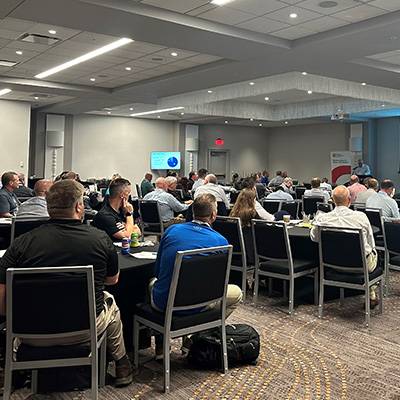
Reps. Adrian Smith, R-Neb., and Joe Courtney, D-Conn., Wednesday co-hosted the Modern Agriculture Caucus educational briefing for congressional staff to learn more about how farmers and ranchers care for their livestock and poultry. Bill Luckey, NPPC board member and a pork producer from Columbus, Neb., served on the panel, which also included producer-representatives from the Egg Farmers of America, National Cattlemen’s Beef Association and the National Milk Producers Federation. Discussed at the well-attended briefing were the major flaws in H.R. 3798, the “Egg Products Inspection Act Amendments.” NPPC strongly opposes H.R. 3798 because it will set a dangerous precedent for allowing the federal government to tell farmers how to raise and care for their animals and will encourage other special interest groups that want to influence animal production practices without scientific basis. Fellow panelists echoed NPPC’s concerns. Click here to view photos from the briefing.


NPPC PARTICIPATES IN MEDIA BRIEFING ABOUT FDA ANTIBIOTICS GUIDANCE

NPPC Chief Veterinarian Liz Wagstrom Wednesday participated in an antibiotics media briefing presented by the Animal Health Institute and the American Veterinary Medical Association. Dr. Wagstrom voiced the pork industry’s concerns with the U.S. Food and Drug Administration’s guidance on the use of antibiotics in livestock and poultry production. NPPC, which strongly opposed the guidance, believes it will disproportionately affect small producers, have a negative effect on animal health and increase the cost of producing food while not improving public health. To read more about the FDA guidance, click here.


HOUSE COMMITTEE HOLDS FINAL FARM BILL FIELD HEARING; D.C. HEARINGS SET

The House Agriculture Committee Friday held the fourth and final Farm Bill field hearing at the Magouirk Conference Center in Dodge City, Kan. Agricultural producers from across the Midwest testified before the committee, giving candid accounts of their operations and of the government programs for farmers. Much like the three previous Farm Bill field hearings, the farmers expressed their need for a valuable safety net, a variety of risk-management tools and regulatory assurance. The Farm Bill field hearings, designed to provide committee members with first-hand accounts of how farm policy affects farmers and ranchers, are the second step in developing a 2012 Farm Bill. For the complete lineup of witnesses and to read testimony, click here. In a related matter, Committee Chairman Frank Lucas, R-Okla., Wednesday announced an additional series of eight Farm Bill hearings to be held in Washington, D.C. The committee’s six subcommittees next week will begin hearings, which will conclude in May.


CONCERN FOR U.S. PORK EXPORTS AS FTA WITH COLOMBIA NEARS IMPLEMENTATION

The U.S.-Colombia Free Trade Agreement (FTA) is set to enter into force May 15. The implementation of the agreement has the potential to greatly benefit the U.S. pork industry. Iowa State University economist Dermot Hayes calculates that when fully implemented the FTA will generate an additional $68.9 million in U.S. pork exports, raise live U.S. hog prices by $1.15 and create 919 new jobs from increased pork exports alone. Unfortunately, Colombia requires that the United States freeze or test pork as a mitigation against trichinae, a non-scientific barrier that inhibits the growth for the U.S. pork industry. The requirement does not apply to domestic pork. According to USDA’s Animal Plant and Health Inspection (APHIS), there is a negligible risk of trichinae in U.S. commercial pork, and it does not present a risk to public health. According to Dr. Ray Gamble, president of the International Commission on Trichinellosis, the odds of trichinae in the U.S. commercial pork supply is 1-in-300 million. As recently as mid-March 2012, the Colombian agricultural ministry reiterated its willingness to lift the trichinae-related restrictions on U.S. pork. NPPC believes the trichinae mitigation requirement should be removed from the export certificate and should be done before final implementation of the U.S.-Colombia FTA.


U.S. PORK EXPORT CONCERNS ADDRESSED IN LETTER TO THAI TRADE REPRESENTATIVE

The Office of Agricultural Affairs for the U.S. embassy in Bankok earlier this month sent a letter to Thai Trade Representative Dr. Olarn Chaipravat reiterating the U.S. pork industry’s concerns about restrictive Thai sanitary measures against imported unprocessed pork. Thailand maintains a non-science based ban on the importation of pork produced using ractopamine and the use of ractopamine in its own domestic pork production. In fact Thailand’s policy against ractopamine contradicts the findings of Thailand’s regulatory authority, which has found the product to be safe. U.S. pork exports to Thailand are further limited by the reluctance of the Thai Department of Livestock and Development to grant import licenses for uncooked U.S. pork, a policy that has never been explained by the Thai government. Thailand also imposes an inspection fee of five Baht per kilogram ($162 per metric ton) on imported pork compared with an inspection fee of only $15 on domestic pork. The inspection fee is in direct violation of World Trade Organization rules, which require inspection fees to reflect the true cost of inspection.  The letter to Dr. Olarn mentions the efforts NPPC has made to address these barriers, citing four meetings NPPC has held with Thai representatives since 2010.


NPPC GARNERING SUPPORT FOR CODEX APPROVAL OF RACTOPAMINE MRLS

The U.N.’s Codex Alimentarius Commission, established by the U.N.’s Food and Agriculture Organization and its World Health Organization to promote food safety and fair practices in trade, will meet in July for its 35th session and is expected to revisit, for the fifth time, the decision to approve for ractopamine a standard setting maximum residue limits (MRLs). Ractopamine is a feed ingredient that has been approved by 26 national regulatory authorities for use in cattle and swine as a method of producing leaner meat in a more efficient manner. The European Union, however, has expressed strong opposition to the approval of the recommended MRLs for ractopamine. European opposition is outside the scope of the Codex and is not founded on sound science. A Codex panel of international scientists, including scientists from the European Union, has confirmed the safety of ractopamine multiple times. The non-scientific opposition has devolved the discussion surrounding ractopamine into a political matter with potential risk to international trade and food security. NPPC’s Laurie Hueneke, director of International Trade Policy, Sanitary & Technical Issues, is currently reaching out to numerous embassies to help garner support for the approval of the ractopamine MRLs at the upcoming Codex meeting.


WHAT’S AHEAD


SENATE BANKING COMMITTEE TO HOLD MF GLOBAL HEARING

The U.S. Senate Banking Committee Tuesday will hold a hearing to examine the collapse of MF Global. The hearing will be the sixth congressional examination of the collapse of the futures trading firm and will feature the first public testimony from former FBI Director Louis Freeh, the bankruptcy trustee for MF Global.


HOUSE AGRICULTURE SUBCOMMITTEES CONTINUE FARM BILL HEARINGS IN D.C.

The U.S. House Agriculture Subcommittee on Rural Development, Research, Biotechnology, and Foreign Agriculture Wednesday will hold a Farm Bill hearing on rural development programs. The Conservation, Energy, and Forestry Subcommittee Thursday will hold a Farm Bill hearing on conservation programs.


SENATE AGRICULTURE COMMITTEE TO BEGIN FARM BILL MARKUP

The U.S. Senate Agriculture, Nutrition & Forestry Committee Wednesday will markup the 2012 Farm Bill.


Follow NPPC on Twitter, view NPPC’s Facebook page, and keep up to date with Hogs on the Hill.